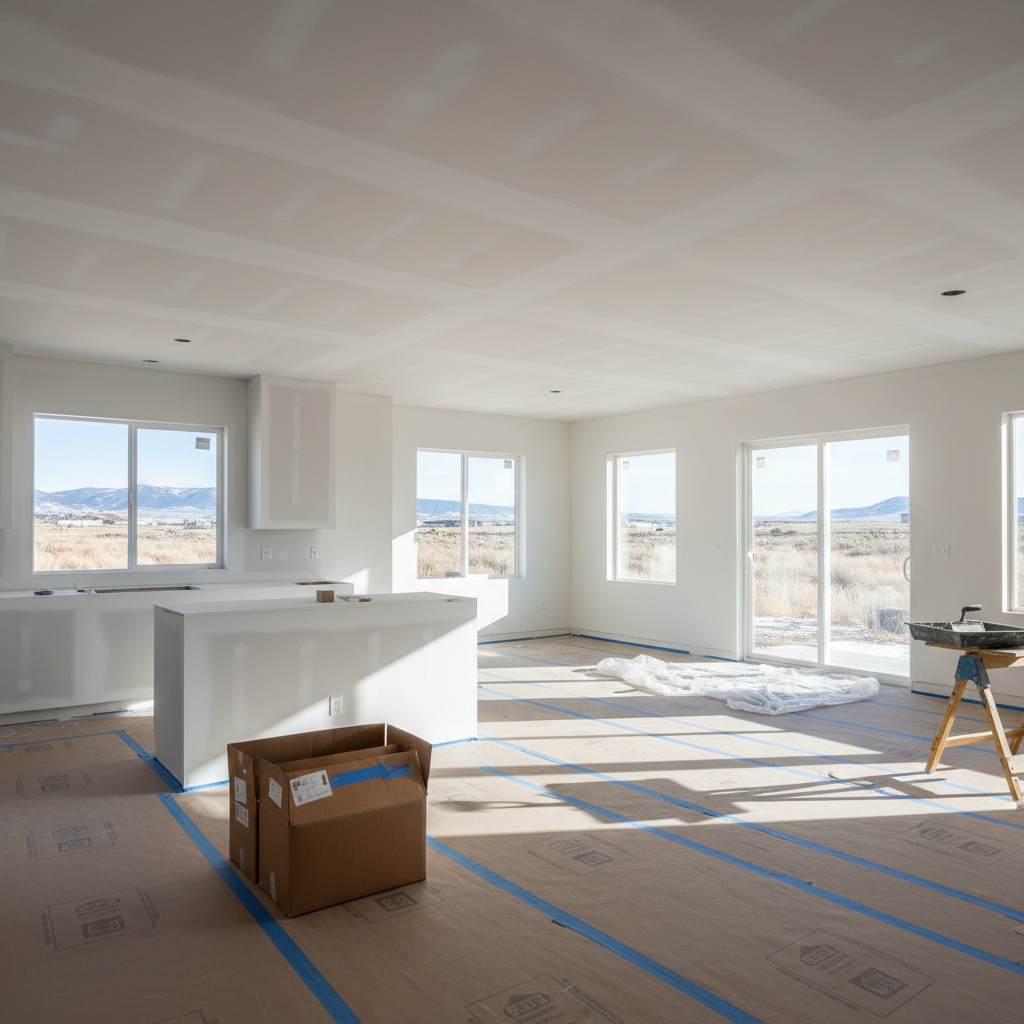
Alright, so you're thinking about getting some drywall finishing done in your Eagle home. Maybe it's a new build, a big remodel, or just fixing up some old walls. Whatever the reason, you've got questions, and I'm here to give you the lowdown from my experience here at Midway Drywall.
Understanding Your Project Timeline
Let's talk timelines first, because everyone wants to know when they'll have their house back. Drywall finishing isn't a one-day job, and rushing it is a recipe for disaster. You're looking at a multi-stage process, and each stage needs proper drying time. That's non-negotiable. Even though our dry Eagle air sometimes makes things cure faster, you still can't skip steps.
- Taping & First Coat: This is where we get the tape on the seams and corners, then apply the first layer of mud. This usually takes a day or two, depending on how big the job is.
- Drying Time: You'll need at least 24 hours — sometimes more — for that first coat to dry completely. Humidity plays a role here, you know?
- Second & Third Coats (Skim Coats): We'll come back, apply more mud, feather it out, and get things smoother. Each of these coats also needs its own drying time, usually 12-24 hours between applications.
- Sanding: Once all the coats are dry, we sand everything down to a smooth finish. This is the dusty part, but it's critical for a paint-ready surface.
- Final Inspection & Touch-ups: We'll do a final walk-through, often with you, to catch any last little imperfections.
So, for an average room or two, you might be looking at 3-5 days of actual work, spread out over a week or more once you factor in drying times. A whole house? That's a few weeks, easy. Don't let anyone tell you they can do it faster without sacrificing quality.
What to Expect During the Process
When we're working at your place, it's going to get a little messy, and it's going to get dusty. There's no way around it. We do our best to contain it, but drywall dust is super fine and it gets everywhere.
- Noise: There will be some noise from tools, especially during sanding.
- Dust: As I said, dust is the biggest thing. We'll lay down drop cloths, hang plastic sheeting, and try to seal off areas as best we can. But you'll still find it. Plan on a good clean-up after we're done.
- Temperature: We need a consistent temperature for the mud to dry properly, usually between 55-70 degrees Fahrenheit. If it's the dead of winter or peak summer, we might need you to keep the HVAC running.
- Access: We'll need clear access to the work areas. That means moving furniture, clearing pathways, and making sure our crew can get in and out efficiently.
- Patience: This isn't a rush job if you want it done right. Good drywall finishing takes time and attention to detail.
We're usually in and out for specific tasks, so you won't have a crew in your house all day, every day, for the entire duration. It's more like a few hours here, a few hours there, with drying time in between.
How to Prepare Your Home
Getting your home ready before we even show up can make a huge difference in how smoothly the project goes and how much dust ends up in your favorite armchair. Here's what I tell folks:
- Clear the Area: Move all furniture, electronics, wall hangings, and anything else valuable out of the work zone. If it's too big to move, cover it completely with heavy plastic sheeting.
- Protect Your Floors: While we'll put down drop cloths, it's not a bad idea to lay down your own additional protection, especially on carpets or delicate flooring.
- Remove Obstacles: Take down curtains, blinds, and any light fixtures that are in the immediate work area. We'll need clear access to every inch of the wall.
- Turn Off HVAC (Temporarily): During sanding, it's best to turn off your heating or AC system to prevent dust from circulating through your ducts. We'll let you know when to do this.
- Secure Pets & Kids: Drywall dust isn't great for lungs, and tools can be dangerous. Keep pets and small children out of the work area for their safety and to avoid accidental damage to our work.
- Ventilation: If possible, plan to open windows during and after sanding to help clear the air.
The more you do upfront, the less hassle there is for everyone, and the faster we can get to work.
Questions to Ask Before Signing a Contract
Before you commit to anyone, you need to be asking the right questions. Don't be shy. This is your home and your money.
- What's your exact scope of work? Make sure the contract clearly spells out what's included. Is it just taping and mudding? Does it include sanding? What level of finish are you getting? (Most homeowners want a Level 4 or Level 5 for paint-ready walls.)
- What's your payment schedule? A reputable contractor won't ask for 100% upfront. Expect a reasonable deposit, then progress payments.
- Do you carry insurance? This is HUGE. You want to make sure they have general liability insurance and workers' compensation. Ask for proof. If someone gets hurt on your property and they're not insured, you could be liable.
- How do you handle dust containment and cleanup? Get specifics. What measures do they take? What's your responsibility for cleanup afterward?
- What's the warranty on your work? Good contractors stand behind their work. Ask about their guarantee against cracks or imperfections.
- Can you provide references? Talk to past clients. Ask about their experience, communication, and if the project stayed on budget and schedule.
- What's the estimated timeline, including drying times? Get a realistic schedule, not just how many 'work days' it will take.
- Who will be on site? Will it be the owner, or a crew? How many people?
Here at Midway Drywall, we're always happy to answer these questions and any others you've got. We want you to feel comfortable and confident in the process. We've been working on homes from Star to the foothills of Eagle for years, and we know what it takes to get a job done right, with no surprises. Getting your drywall finished properly is a big step towards a beautiful home, so take the time to plan it out and ask the right questions.