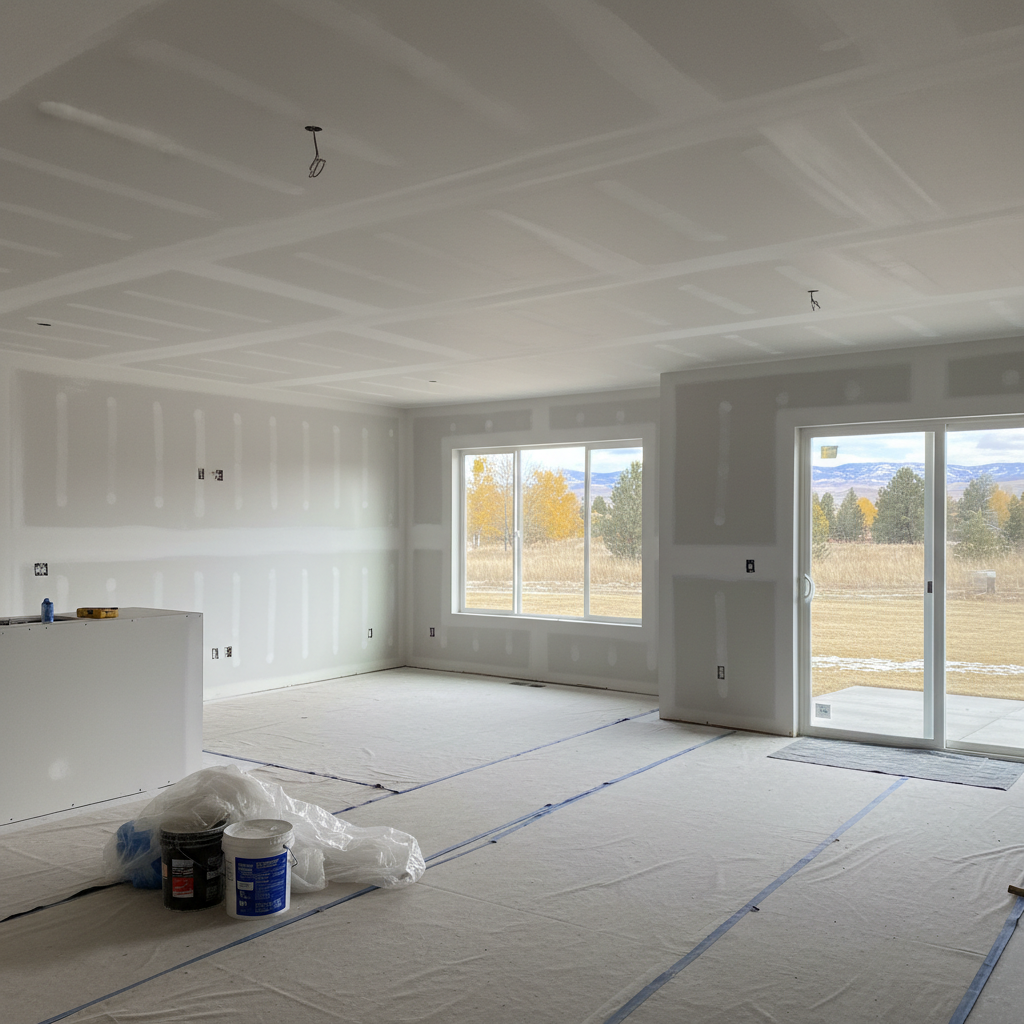
Don't Let Idaho Weather Mess Up Your Drywall Finish
Ever wonder why sometimes a drywall job looks perfect, and other times you see cracks or seams popping up a few months later? A lot of it comes down to timing, especially here in Eagle. We get some pretty wild swings in temperature and humidity, and that can really mess with how drywall mud dries and sets. As a local contractor, I've seen it all, and I want to give you the straight scoop on what you need to know.
When's the Best Time for Taping and Mudding?
Honestly, there's no single 'perfect' day, but there are definitely better seasons. What you're really looking for is stable conditions. Drywall mud is mostly water, right? So, how that water evaporates and cures is super important. Too fast, too slow, too humid, too dry – all of it can cause problems down the line.
Here's my take:
Spring and Fall are usually your best bets. The temperatures are milder, and the humidity tends to be more consistent. You're not battling the intense dry heat of summer or the biting cold of winter. This lets the mud cure at a more controlled pace, which means a stronger, more durable finish.
Summer can be tricky. Those 90+ degree days we get, especially when it's dry, can make the mud flash-dry on the surface before it's cured underneath. That leads to cracking, shrinking, and poor adhesion. If you *have* to do it in summer, you've got to control the environment inside. We're talking about running AC, maybe even a humidifier if it's super dry, and keeping direct sunlight off the walls.
Winter? It's a challenge. Cold temperatures slow down drying significantly. If it's too cold, the mud won't cure properly at all. You'll need to keep the house heated to at least 55-60 degrees Fahrenheit, ideally warmer, for the entire process and for several days afterward. Watch out for drafts too; they can cause uneven drying.
Humidity and Temperature: The Drywall Mud's Worst Enemies (or Best Friends)
Think of drywall mud like concrete – it needs to cure, not just dry. And curing is a chemical process that's heavily influenced by its surroundings. Here in Eagle, with our high desert climate, we often deal with very low humidity, especially in summer and winter. This is a big deal for drywall.
Low Humidity: Makes mud dry too fast on the surface. You'll see hairline cracks, or the mud might not bond as well to the tape or the sheetrock. It's like trying to bake a cake at too high a temperature – the outside burns, but the inside's still raw. We often have to mist the air or use humidifiers to slow down the drying process, especially when working in new builds in places like Legacy or Two Rivers where the air can be bone dry.
High Humidity: This isn't as common for us as low humidity, but it can happen, especially during a rainy spring. High humidity means the mud takes forever to dry. This can lead to mold growth if it stays wet too long, and it can also weaken the mud's integrity. It's frustrating because you can't sand or apply the next coat until it's completely dry, which can drag out a project.
Temperature Swings: Rapid changes in temperature, like a warm day followed by a cold night, can cause the drywall and mud to expand and contract at different rates. This movement can lead to stress cracks, especially around windows and doors.
Protecting Your Drywall Investment Year-Round
Once your drywall is taped, mudded, and painted, you want it to last. Here's how to keep it looking good:
First off, maintain a stable indoor environment. I know, easier said than done, but try to keep your home's temperature and humidity as consistent as possible. Big fluctuations are what cause problems. If you're going on vacation in the winter, don't turn your heat off completely; set it to a lower but still warm temperature to prevent the house from getting too cold.
Second, address any water issues immediately. Leaky roofs, plumbing problems, or even excessive condensation can ruin drywall fast. Water causes mud to soften, paint to peel, and sheetrock to swell and crumble. Get those fixed pronto. We at Midway Drywall see a lot of water damage, and catching it early saves you a ton of headache and money.
Finally, don't ignore small cracks. Sometimes a house settles a bit, or you get a minor stress crack. If you see one, especially in a corner or along a seam, don't just paint over it. It usually means there's some movement. A quick patch and paint is better than letting it get worse. Most of the time, it's a simple fix if you catch it early.
Getting a smooth, durable drywall finish isn't just about the skill of the person doing the work – though that's a big part of it! It's also about respecting the materials and understanding how our unique Idaho climate affects them. Keep these tips in mind, and your walls will thank you.