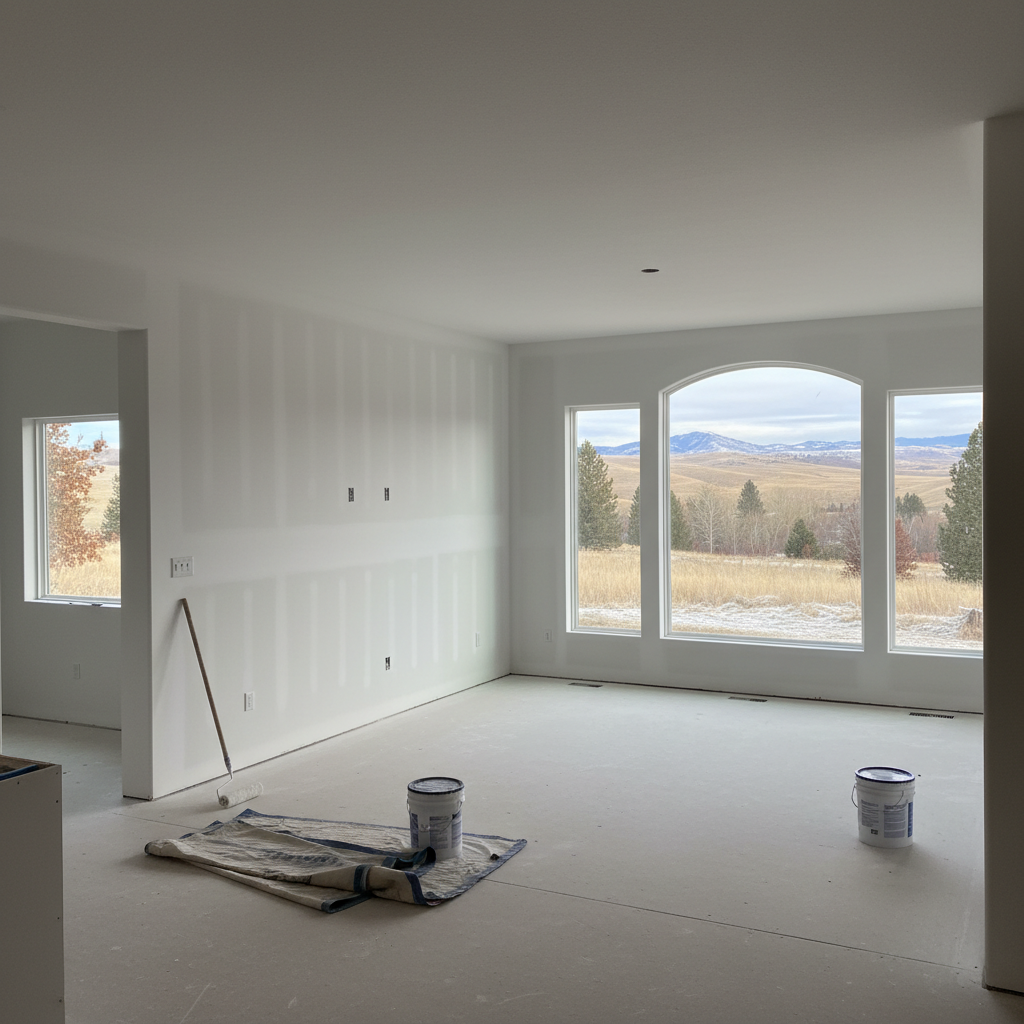
You've just had new drywall installed, or maybe you're getting ready to paint an existing room. The next step is priming, and a lot of folks just slap it on without much thought. But here in Eagle, with our wild temperature swings and dry air, priming isn't just a formality; it's a critical step to make sure your walls look good and last for years.
Why Eagle's Climate Matters for Drywall Priming
Our seasons are pretty distinct, right? We get those scorching hot, dry summers and then cold, sometimes snowy winters. This constant expansion and contraction, coupled with low humidity for much of the year, puts stress on your drywall. If you don't prime correctly, you're setting yourself up for issues like paint flashing, uneven finishes, or even premature cracking down the line.
Think about those brand new homes popping up in neighborhoods like Legacy or Mace River Ranch. They're built fast, and sometimes the drywall doesn't get enough time to fully acclimate before priming. That's where you can run into trouble if you're not careful.
When to Schedule Your Drywall Priming
Honestly, there's no single 'perfect' time, but there are definitely better times and times to avoid. What you're really looking for is stable conditions, not extreme heat or cold.
Spring and Fall are your best friends: These seasons usually offer more moderate temperatures and humidity levels. You're not battling the intense heat of summer or the deep chill of winter. This allows the primer to cure evenly and bond properly to the drywall surface.
Summer's a tricky one: If you're priming in summer, you absolutely need to control the indoor temperature and humidity. Don't just open all the windows when it's 95 degrees and dry outside. Run your AC, keep the house comfortable, and make sure the primer isn't drying too fast on the surface before it has a chance to penetrate.
Winter means warmth: In winter, you've got to keep the house adequately heated. Priming in a cold, unheated space is a recipe for disaster. The primer won't cure correctly, and you'll end up with poor adhesion. We're talking about keeping it above 50°F, ideally closer to 65-70°F, for the best results.
Weather Conditions to Watch Out For
It's not just about the season; it's about the day-to-day weather too. I've seen plenty of jobs where folks rushed things, and it always comes back to bite them.
Humidity is key: Too low, and the primer dries too fast, not allowing proper penetration. Too high, and it can take forever to dry, leading to potential sagging or an uneven finish. Aim for a relative humidity between 30-50% if you can. A simple hygrometer can help you monitor this.
Temperature swings: Avoid priming if you know there's a huge temperature drop coming overnight. You want consistent conditions for at least 24-48 hours after application.
Dust and wind: If you're doing exterior work that might kick up dust, or if you've got a lot of construction going on nearby, try to seal up your house as best you can. Dust settling on wet primer is a pain to fix.
Protecting Your Drywall Investment Year-Round
Priming is a big part of it, but it's not the only thing. Once your walls are primed and painted, ongoing care is crucial:
Maintain consistent indoor temps: Try not to let your house get too hot or too cold, especially when you're away. Extreme fluctuations stress the drywall joints and paint.
Control humidity: In our dry climate, especially in winter, consider using a humidifier to keep indoor humidity levels stable. This helps prevent the drywall from drying out and cracking.
Address leaks immediately: Any water damage, even small leaks, can ruin drywall fast. Fix them right away.
Use quality products: Don't skimp on primer or paint. A good quality primer, especially one designed for new drywall or stain blocking, makes a huge difference. We at Midway Drywall always recommend using the right primer for the job; it saves headaches later.
Taking a little extra time and being mindful of our local Eagle climate when priming your drywall will pay off big time. You'll get a better-looking, more durable finish that stands up to whatever our Idaho weather throws at it.