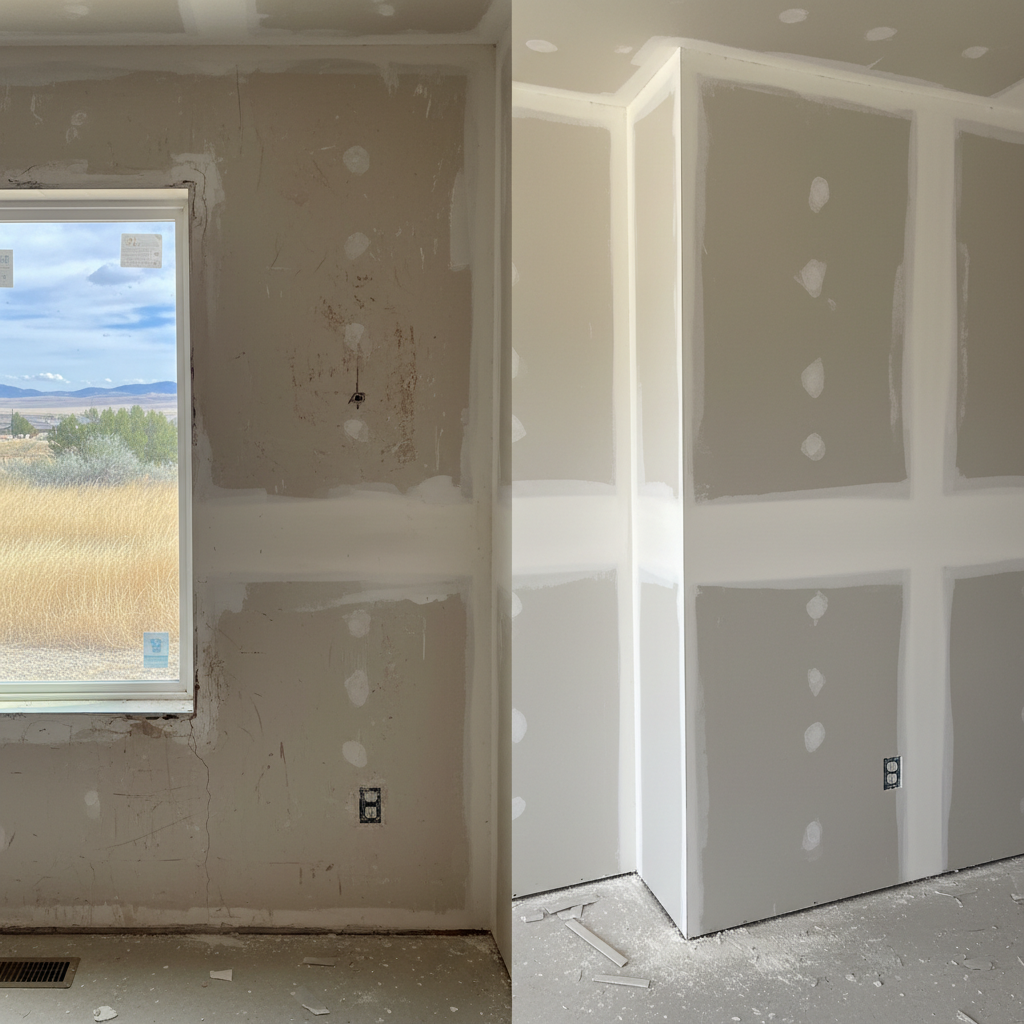
You're building a new home or maybe gutting a room in your place down by the Boise River. You've picked out your paint colors, but have you thought about what's underneath? The drywall finish isn't just about slapping up some sheets; it's about the quality of the surface you're painting. Here in Eagle, ID, homeowners often ask me about the difference between a standard finish and what we call a Level 5. Let's get into it.
What's a Standard Finish (Level 4)?
When most folks talk about drywall, they're usually thinking about a Level 4 finish. This is pretty common for residential construction, and it's what you'll find in a lot of homes around Eagle, from the older places in the downtown area to many of the newer subdivisions. With a Level 4, we hang the drywall sheets, tape all the seams, and then apply a couple of coats of joint compound (mud) over the tape and screw heads. We sand it smooth between coats, and then you're ready for primer and paint.
It's a solid, durable finish. For walls that are going to have a bit of texture, like orange peel or knockdown, or if you're using a flat paint, a Level 4 is usually perfectly fine. You might see very slight imperfections if you look really, really close under harsh lighting, especially with glossy paints. But for everyday living, it holds up great and looks good.
Stepping Up to a Level 5 Finish
Now, a Level 5 finish is the Cadillac of drywall. It starts the same way: hanging the sheets, taping the seams, and applying mud over the tape and screws. But here's the kicker: after those initial coats, we apply a very thin, skim coat of joint compound over the *entire* surface of the drywall. Every square inch gets a thin layer of mud, which is then sanded down to a perfectly smooth, uniform surface.
Why go to all that extra trouble? Well, that skim coat completely eliminates any minor variations in the drywall paper, any faint ridges from the tape, or slight depressions from the screw heads. It creates a truly monolithic surface. When you paint over a Level 5 finish, especially with darker colors, glossy paints, or under critical lighting (like big windows or recessed lights that wash down a wall), you won't see any flashing, joint banding, or texture differences. It's as smooth as a baby's bottom, and it makes your paint job look absolutely flawless.
Cost, Durability, and Maintenance
Let's talk brass tacks. The biggest difference you'll notice right away is cost. A Level 5 finish takes more time, more material (more mud), and more skill. You're paying for that extra labor and the meticulous attention to detail. Expect it to add anywhere from 15% to 30% or even more to your drywall finishing costs, depending on the project's complexity and the current market.
In terms of durability, both Level 4 and Level 5 are very durable. The drywall itself is the same. The difference is purely aesthetic. A Level 5 won't chip or scratch any easier than a Level 4. Maintenance is also pretty much the same; if you get a ding, you'll patch it and repaint. The only thing is, if you have to do a repair on a Level 5, matching that perfectly smooth, consistent texture can sometimes be a bit more challenging than blending into a Level 4 with a bit of texture.
Which One Should You Choose for Your Eagle Home?
This is where local conditions come into play. Eagle, ID, like much of the Treasure Valley, experiences pretty significant temperature swings throughout the year. We get those hot, dry summers and cold winters. This can cause some minor expansion and contraction in building materials. While modern drywall techniques and materials are excellent, a Level 5 finish can, in some cases, offer a slightly more stable base for paint, as it minimizes any surface irregularities that might become more noticeable with movement or changing light.
Here's my honest take:
- For most homes and most rooms, a good Level 4 finish is perfectly adequate. If you're going with textured walls (like orange peel or knockdown), or if you're using flat or eggshell paints, you'll be happy with a Level 4. It's cost-effective and looks great.
- Consider a Level 5 for high-end homes, critical lighting areas, or if you're using glossy/satin paints or dark colors. If you've got a modern home with lots of natural light, or you're planning on a dramatic paint scheme, investing in a Level 5 will make a huge difference in the final look. It's also great for ceilings, where light often washes across the surface, highlighting imperfections.
- Think about your budget and your expectations. If you're a perfectionist and you want walls that look like they belong in a magazine, Level 5 is your choice. If you want a quality finish without breaking the bank, Level 4 is the way to go.
At Midway Drywall, we do both, and we do them well. We'll always discuss your project and help you decide which level of finish makes the most sense for your home and your budget. Don't hesitate to ask questions; getting it right at this stage saves a lot of headaches down the road.