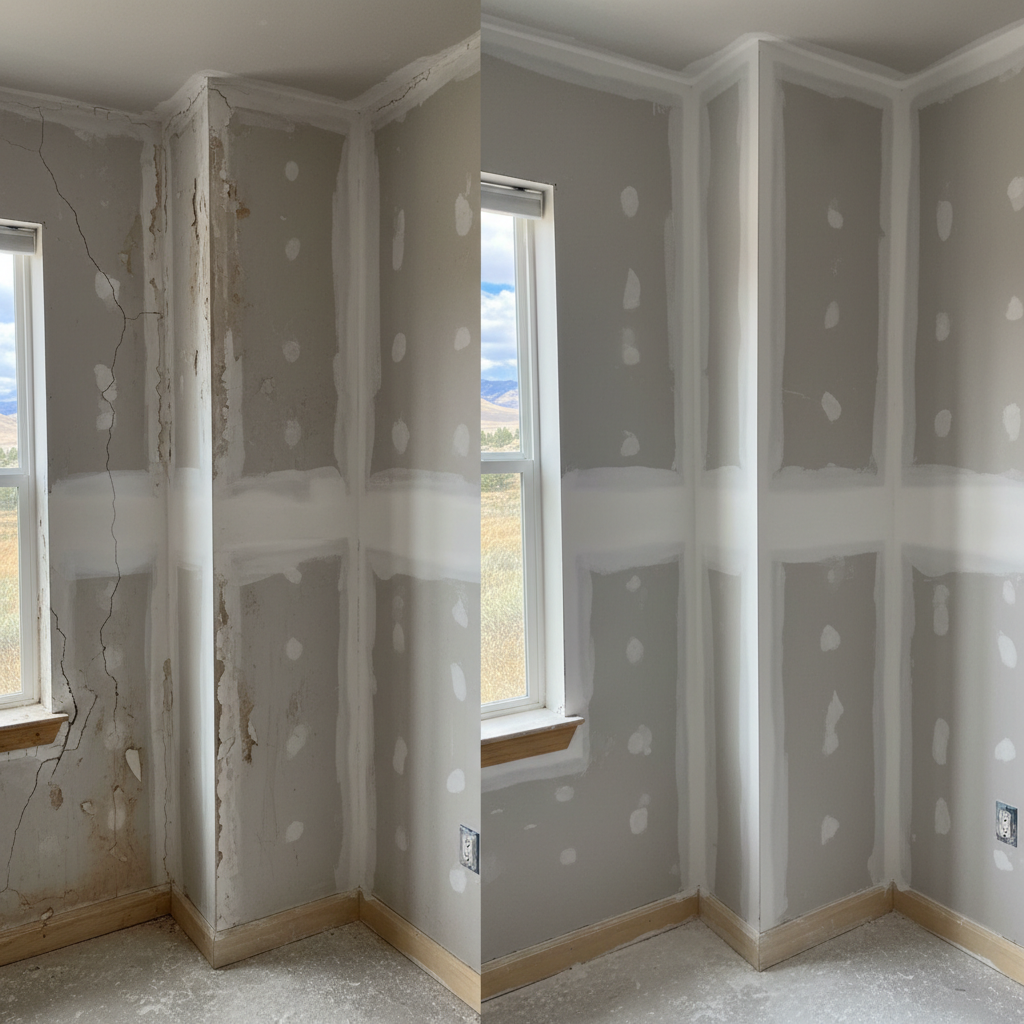
So, you've got a big drywall project on your hands, right? Maybe a new build out in Legacy, or a remodel downtown in Eagle. The sheets are up, or they're about to be. Now comes the really crucial part, the one that makes or breaks how the whole thing looks: taping and mudding. There are two main ways the pros tackle this, and it's worth knowing the difference. Why? Because it impacts everything from the final cost to how long your walls will actually look good.
Hand Taping and Mudding: The Old-School Way
This is how folks have done it for generations. And you know what? It’s still a perfectly good method, especially for smaller jobs or those tricky, intricate spots. When we hand tape, we’re literally putting paper tape right over the seams and corners. Then we smooth it out with joint compound, using a hawk and trowel or maybe a pan and knife. It’s a skill, truly, that takes years to really nail down – getting that perfect feather edge and a super smooth finish.
Cost: Generally, hand finishing can be a bit more labor-intensive. That sometimes means a slightly higher cost per square foot, especially on really big, open areas. But for smaller rooms, repairs, or custom details, it can actually be more efficient.
Durability: When someone does it right, a hand-taped joint is incredibly tough. The paper tape, properly embedded in the mud, forms a really strong bond. You shouldn't have any issues with cracking if the mudding is done well and the house settles normally. The big thing here is 'done right' – it really depends on the individual's skill.
Maintenance: No special maintenance needed. Just like any other drywall, keep it clean, patch any dings, and repaint whenever you want.
Appearance: A skilled hand finisher can make a wall look absolutely flawless, like glass. The mud's texture can be feathered out perfectly, blending right into the drywall. It's all about the craftsman's touch and eye.
Automatic Taping and Mudding Tools: The Modern Approach
Okay, now let's chat about automatic tools. You might hear them called 'bazookas' or 'flats boxes.' These are mechanical tools that either apply tape and mud at the same time, or they put down mud in precise, consistent layers. They're built for speed and consistency, especially on big jobs with lots of long, straight runs.
Cost: For larger projects, automatic tools usually speed up the process, which can bring down labor costs. We can cover a lot more ground in a day with these. So, for a whole house, this method often ends up being more cost-effective overall.
Durability: Just like hand finishing, the durability is excellent when it's done correctly. The tools make sure there’s a consistent layer of mud under the tape, and that’s super important for strength. They reduce the chance of 'dry spots' where the tape isn't stuck down properly. We’ve used these tools for years at Midway Drywall, and the results, well, they speak for themselves.
Maintenance: Again, standard drywall maintenance applies here. No special considerations for walls finished with automatic tools.
Appearance: This is where the consistency of the tools really shines. They lay down a very uniform coat of mud. This can lead to an incredibly flat and smooth finish, especially on long walls and ceilings. It's easier to get a high level of finish across an entire large home because the tools cut down on human variation.
So, Which One's Right for Your Eagle Home?
Honestly, for most new construction or big remodels in Eagle – especially if you're going for a smooth, modern look – I'd lean towards using automatic tools for the bulk of the work. They offer excellent consistency, speed, and often a better overall value for larger areas.
That said, a good drywall crew, like us at Midway Drywall, will usually use a combination. We'll use the automatic tools for those long runs, the ceilings, and the main wall seams where consistency is key. But when it comes to inside corners, tricky angles, or any custom architectural features? We'll switch back to hand tools. That’s where the finesse and precision of a skilled hand just can't be beat.
The important thing isn't just the tools; it's the skill of the person using them. Whether it’s a hawk and trowel or a bazooka, an experienced drywall finisher knows how to get that perfect Level 4 or Level 5 finish you're looking for. Don't let anyone tell you one method is inherently 'better' across the board without considering the scope of the job and the crew's skill. Both can deliver fantastic results. It just depends on what you need and who's doing the work.
If you've got questions about your specific project, or you're trying to figure out what kind of finish you need for your home, give us a call. We're happy to talk through it.